In short: Lorries crossing between Johor and Singapore need an LTA Goods Vehicle Permit, rising from S$40 to S$70 a month on 1 January 2027, plus customs permits on both sides. Singapore charges 9% GST on imports and Malaysia levies sales tax at clearance. Second Link lorry queues of up to four hours were reported in 2026, so plan buffers.
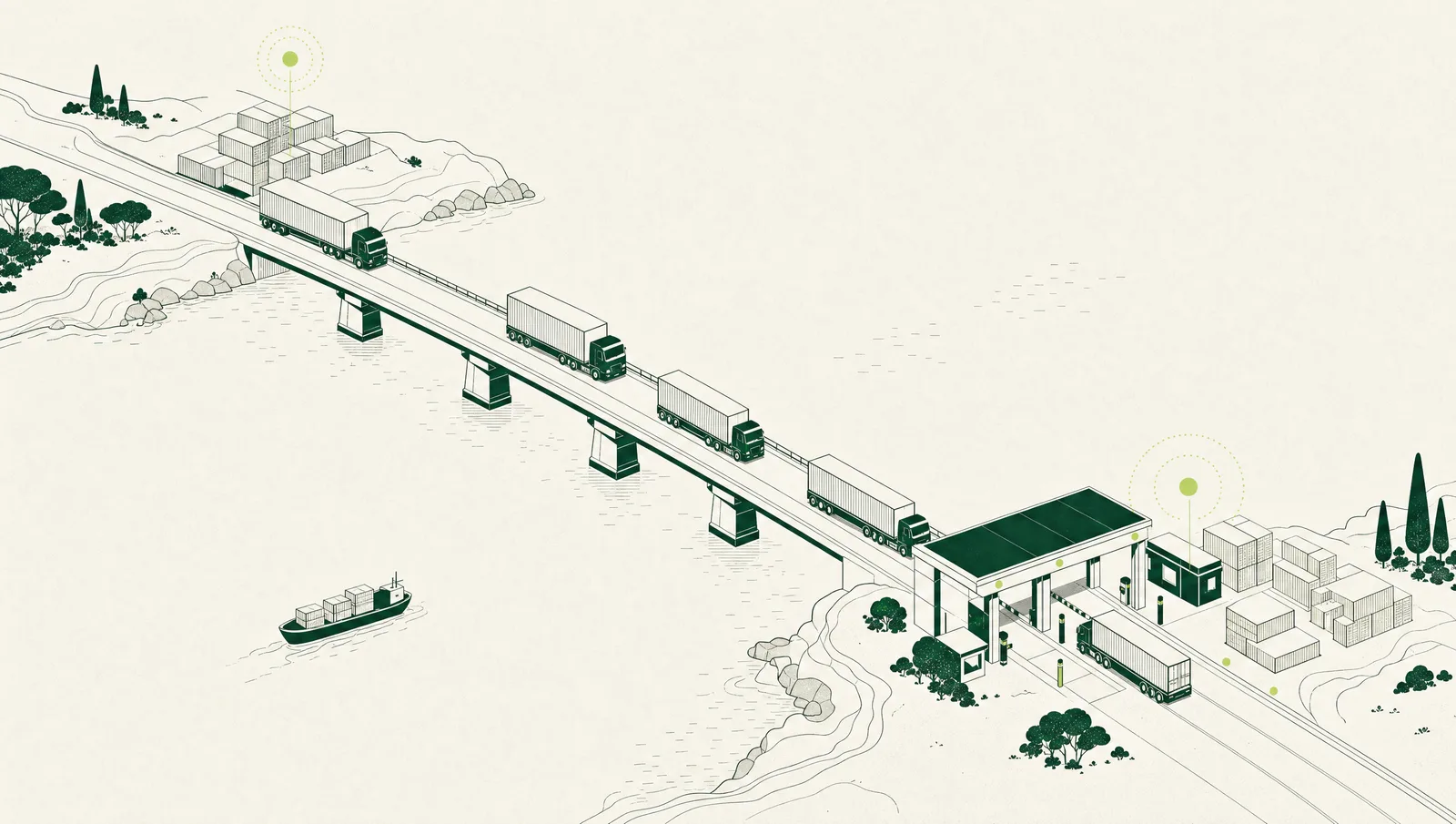
Goods lorries cross between Johor and Singapore through the Woodlands Causeway and the Tuas Second Link every day, with some 3,000 a day entering Singapore via the Second Link alone, according to a Johor assemblyman quoted in April 2026. Demand for this road freight is being shaped by new investment in Johor, congestion at the checkpoints, and a set of permit and clearance changes on both sides that take effect between now and early 2027.
FYAdvisers is a technology consultancy and lead generation firm based in Singapore that now serves Malaysia. We do not drive lorries or clear goods. We help you define what you need and introduce cross-border trucking, freight forwarding and customs clearance providers who do.
What is happening right now
- The Johor-Singapore Special Economic Zone is live. Singapore and Malaysia exchanged the JS-SEZ Agreement on 7 January 2025. MIDA’s tax incentive guidelines accept applications from 1 January 2025 to 31 December 2034, and list nine flagship zones including Tanjung Pelepas, Pasir Gudang and Senai. The package includes a 5% special tax rate for qualifying activities, which MIDA reported on 15 January 2025, and a separate allowance for large smart logistics complexes at Tanjung Pelepas.
- Second Link lorry queues. The New Straits Times reported on 19 April 2026 that lorries had been stranded for up to four hours, with a Johor assemblyman saying some 3,000 lorries enter Singapore via the Second Link daily. Free Malaysia Today linked the queues to mandatory scanning of all heavy vehicles at the Sultan Abu Bakar Complex from mid-February 2026.
- Woodlands is being rebuilt. ICA and SLA said on 4 June 2025 that Phase 1 works start in Q3 2025, with new automated clearance facilities for cargo vehicles, as part of a 10 to 15 year redevelopment.
- Automated cargo clearance. At ICA’s Workplan Seminar on 8 May 2026, the Minister said Automated Cargo Permit Clearance would be progressively deployed across cargo checkpoints from July 2026, combining pre-arrival permit data with X-ray scans.
- Higher Singapore entry costs from 2027. LTA announced in February 2026 that the Goods Vehicle Permit rises from S$40 to S$70 per calendar month from 1 January 2027, and foreign vehicles without the new ERP on-board unit will pay a flat S$10 per ERP operational day. From 2 November 2026, vehicles with unpaid Singapore traffic, parking or emissions fines cannot apply for or renew entry permits, including GVPs.
- The RTS Link is for passengers. The RTS Link was targeted for passenger service by December 2026; on 2 October 2026 the two transport authorities said it is now expected to start in February 2027. It will not carry freight, but it may change how commuters use the road crossings.
For buyers: what to specify
Full or part load
- Full truckload (FTL). One vehicle for your goods only. Best for regular volumes, containers and time-sensitive loads.
- Less than truckload (LTL) or consolidated. Your pallets share a lorry with others. Cheaper for small volumes, but timing depends on the consolidator’s schedule and every shipment on the vehicle must clear.
Checkpoint size limits
ICA sets maximum overall dimensions for cargo vehicles:
| Checkpoint | Length | Width | Height |
|---|---|---|---|
| Woodlands | 18 m | 3.3 m | 4.5 m |
| Tuas | 22 m | 3.5 m | 5.0 m |
Large machinery may therefore have to go through Tuas.
Customs, permits and taxes
Entering Singapore
Singapore Customs’ import guide says importers need a UEN and an activated Customs account, an Inter-Bank GIRO arrangement for duties and GST, and a customs permit lodged through TradeNet, either by you or by a declaring agent. At Woodlands and Tuas the goods, permit and invoices must be presented for clearance, and partial clearance is not allowed. Keep trade documents for five years.
Import GST is 9% of the CIF value plus duties and incidental charges, whether or not you are GST-registered. ICA’s paperless clearance lets drivers or traders submit the vehicle plate and cargo clearance permit numbers before arrival instead of carrying hardcopy permits for endorsement; ICA rolled it out to land cargo checkpoints from late 2022.
Entering Malaysia
Malaysia’s sales tax is charged on imported goods at customs clearance, mostly at 5% or 10% depending on the HS code. The scope expanded on 1 July 2025, when logistics and freight forwarding were also brought into service tax. Check your tariff lines before quoting landed costs.
Under section 90(6A) of the Customs Act 1967, an importer or exporter may appoint a customs agent but is not required to. Section 91 deems the person in charge of goods moved by road to be the importer’s or exporter’s agent, so make sure your driver and haulier know exactly what they are declaring on your behalf.
Lead times
- Apply for a GVP about two weeks before the first trip; status emails usually arrive within about three working days.
- A new Singapore Customs declaring agent account takes about three working days for straightforward cases, but bank approval of the GIRO arrangement takes three to four weeks.
- Allow for queues. Waits of up to four hours were reported at the Second Link in 2026.
How pricing works
We have not found a published price list for Singapore-Johor trucking that we could verify, so we do not quote figures. Quotes usually depend on:
- Vehicle type. Van, rigid lorry, prime mover and trailer, or reefer.
- Route and checkpoint. Distance on each side and whether Woodlands or Tuas is used.
- Fixed government charges. LTA lists heavy goods vehicle checkpoint fees of S$11.30 on entry at Tuas, and the GVP is charged per calendar month.
- Waiting time. Whether detention at checkpoints or sites is included.
- Customs services. Permit lodgement on one or both sides, HS classification and documentation.
- Frequency and volume. Contract rates for regular lanes versus one-off trips.
- Tax. Whether Malaysian service tax or Singapore GST is included.
Red flags
- A haulier who cannot show a current GVP for the vehicle that will turn up
- No APAD operator licence for a company carrying goods for hire
- Quotes that do not say who lodges the customs permits on each side
- A carrier offering to “split” a consignment to avoid clearance at Woodlands or Tuas
- Under-declared values or vague goods descriptions on invoices
- No proof of insurance or road tax for the vehicles
Checklist before you ask for quotes
- Commercial invoice, packing list and HS codes
- Your Singapore UEN and Customs account status, or your Malaysian registration details
- Any controlled-goods permits or licences
- Pickup and delivery addresses, hours and loading equipment
- Volumes per month and peak periods
- Temperature, security or insurance requirements
For suppliers: what buyers will ask you for
Permits for each vehicle
Expect to show the APAD licence category for the work. APAD says Category A covers goods transport for payment and Category C covers companies carrying their own goods, and that goods vehicles under 7.5 tonnes do not need an APAD permit. For regional runs, APAD opened online applications for the ASEAN Cross-Border Goods Vehicle permit in March 2025, ahead of AFAFIST operations from 6 April 2025.
On the Singapore side, buyers will ask for the vehicle’s GVP and Autopass card. Clear any outstanding Singapore fines before 2 November 2026, or you will not be able to renew. Budget for the S$70 monthly GVP from 2027, and decide whether to fit the ERP2 on-board unit or pay the flat daily ERP charge.
Customs capability
If you lodge declarations, buyers will want your Singapore Customs declaring agent banding and the names of registered declarants. Each declarant must pass the SC 401 Customs Competency Test, 50 open-book questions with a 70% pass mark. In Malaysia, section 90 of the Customs Act requires a customs agent to pass a course and examination, be registered for service tax, provide security and hold Director General approval. Acting without approval carries up to five years’ imprisonment, a fine of up to RM100,000, or both.
Security and quality programmes
Larger shippers favour carriers and forwarders in STP or STP-Plus or Malaysia’s AEO programme. Singapore Customs lists Malaysia among its mutual recognition partners, so certified firms can be treated as lower risk. ISO 9001 is often a vendor registration requirement.
Fleet and operations
Be specific about vehicle counts, trailer types, reefer capacity and which checkpoint each vehicle fits. Show GPS tracking, a contact for drivers at the checkpoint, and how you handle delays, damage and returns.
How FYAdvisers matching works
- Describe your need. Tell us what you are moving, where and how often.
- Free concierge consultation. A concierge contacts you to confirm volumes, timing and customs needs.
- We introduce one to five providers. With your consent, we introduce you to the number of providers you choose, up to five.
- Meet and decide. Providers reach out directly with questions and quotes. You choose whether to work with any of them.
Matching is free for you. Providers pay FYAdvisers to receive introductions. FYAdvisers does not move or clear goods, and we only share your details with your consent.
For suppliers
Running lorries or clearing cargo across the Causeway and Second Link?
Apply to receive requests if you operate goods vehicles between Malaysia and Singapore, or lodge customs declarations on either side. Buyers will check your APAD and LTA permits, your customs agent or declaring agent status, your fleet and the checkpoint you can serve.
Who is buying
- Manufacturers in Johor shipping components or finished goods to Singapore
- Singapore distributors and retailers sourcing from Malaysian suppliers
- Contractors and fit-out firms moving equipment for Johor industrial and data centre projects
- Freight forwarders subcontracting the road leg of sea or air shipments
- Food, pharmaceutical and electronics firms needing temperature-controlled or secure transport
- Companies setting up in the Johor-Singapore Special Economic Zone
What buyers expect you to have
- Prime movers with 20ft and 40ft container trailers
- Rigid box and curtainsider lorries for palletised loads
- Refrigerated (reefer) trucks with temperature logging
- Low-loaders and extendable trailers for machinery, within checkpoint size limits
- Light goods vans for small, time-sensitive consignments
- Tail-lift and forklift capability for loading at sites without docks
- GPS tracking and telematics with shareable trip records
- Customs-sealed or lockable trailers for transhipment and bonded moves
Registrations and certifications buyers check
| Certification | Issued by | Why it matters |
|---|---|---|
| Goods vehicle operator licence (Lesen Pembawa A) | APAD (Land Public Transport Agency) | Issued under the Land Public Transport Act 2010 to companies carrying goods for hire; APAD says goods vehicles under 7.5 tonnes do not need an APAD permit. |
| ASEAN Cross-Border Goods Vehicle permit (AGVCB) | APAD | Lets licensed and qualified Malaysian operators run goods vehicles between neighbouring ASEAN states under AFAFIST, with applications through the i-SPKP portal. |
| ASEAN Goods Vehicle Permit (GVP) and Autopass card | Land Transport Authority (LTA), Singapore | Every foreign-registered goods vehicle needs a valid GVP and Autopass card to enter Singapore, or it is turned back at Woodlands or Tuas. |
| Declaring Agent account and registered declarants | Singapore Customs | Needed to lodge import and export permits in TradeNet for Singapore clients; declarants must pass the SC 401 competency test. |
| Customs agent approval under section 90, Customs Act 1967 | Royal Malaysian Customs Department (JKDM) | Needed to declare and clear goods for Malaysian importers and exporters; buyers ask for the approval letter and its conditions. |
| STP-Plus or Malaysian AEO accreditation | Singapore Customs / JKDM | Supply chain security programmes covered by the Singapore-Malaysia mutual recognition arrangement, which can mean fewer document checks and inspections. |
| ISO 9001 quality management certification | ISO, via accredited certification bodies | Often required in vendor registration by manufacturers and multinationals to show documented procedures and corrective action. |
Frequently asked questions
How does matching work?
You describe what you are moving between Singapore and Malaysia, such as the goods, volumes, pickup and delivery points, frequency and any temperature or security needs, and whether you also need customs clearance. A concierge then contacts you to confirm the details and, with your consent, introduces you to the number you choose (one to five) of cross-border trucking, forwarding or customs clearance providers that handle that kind of work. They contact you directly, and you decide whether to go ahead with any of them.
Is it free?
Yes. It is free for businesses requesting a match. Providers pay FYAdvisers to receive introductions. FYAdvisers is a technology consultancy and lead generation firm, not a haulier or customs agent, and does not move or clear goods itself.
Can I use the RTS Link to move goods?
No. The Johor Bahru-Singapore RTS Link is a passenger rail service between Bukit Chagar and Woodlands North, which Malaysia's Transport Ministry and Singapore's LTA said on 2 October 2026 is expected to start passenger service in February 2027. Commercial cargo still moves by road through Woodlands and Tuas, or by sea and air.
What permits does a Malaysian lorry need to enter Singapore?
LTA requires a valid ASEAN Goods Vehicle Permit, an Autopass card, LTA's approval email, valid road tax and insurance, and proper number plates. LTA advises applying about two weeks before travel. The GVP costs S$40 per calendar month, rising to S$70 from 1 January 2027. The goods also need customs permits on both sides.
How much does cross-border trucking between Singapore and Johor cost?
We have not found a published price list we could verify, so we do not quote figures. Hauliers usually quote per trip or per pallet, based on vehicle type, origin and destination, checkpoint, waiting time, customs services, temperature control and frequency. Ask for an itemised quote that separates transport, permits, checkpoint fees and clearance.