
In short: Link building is the work of getting other websites to link to yours. A backlink is a link on another site that points to a page on your site. Google uses links to discover pages and to judge what they are about, and PageRank is still part of its core ranking systems. Good links are earned from relevant sites; paid links must be marked sponsored or nofollow.
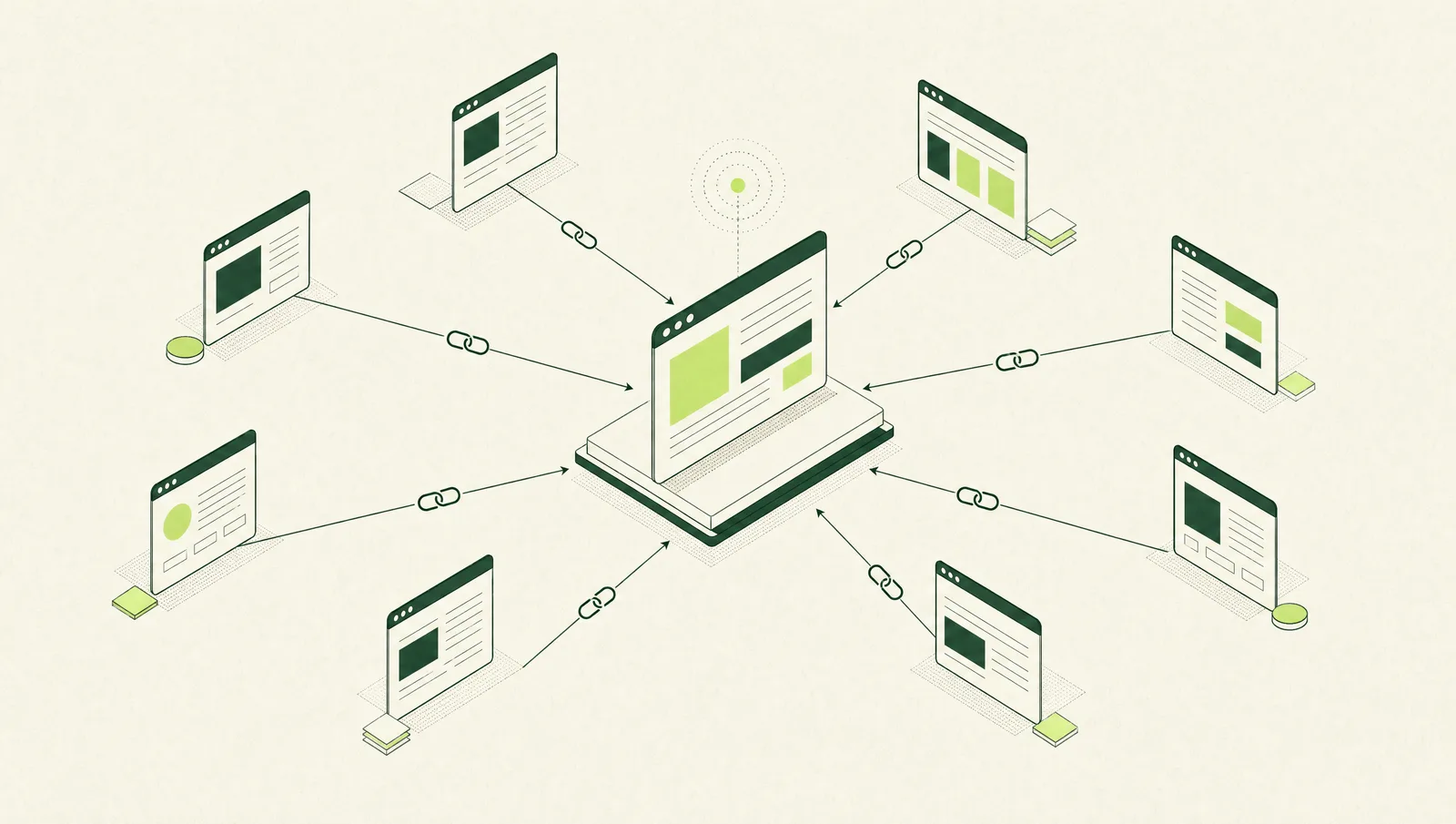
Link building is the work of getting other websites to link to pages on your website. Each of those links is a backlink: a clickable link on someone else’s page that points to yours. Links matter because Google uses them to find new pages and to understand what pages are about, and because people follow them to discover businesses they did not know about. Good link building earns links from relevant, real websites. Bad link building buys or manufactures them, which breaks Google’s spam policies.
This guide explains how Google uses links, the different types of link, what makes one link more useful than another, and the methods Singapore businesses can use without putting their site at risk.
What is a backlink?
A backlink is a link from another domain to yours. A few examples:
- A supplier lists you as a stockist and links to your homepage.
- A trade publication quotes your director and links to your services page.
- A blogger cites your cost guide and links to it.
Links between pages on your own website are internal links. They matter too, but they are not backlinks. The words you click on are the anchor text, and they tell readers and Google what the linked page is about.
How Google uses links
Google says plainly that links are one of the main ways it finds content. Its SEO starter guide states that Google primarily finds pages through links from pages it has already crawled.
Links also feed into ranking. Google’s guide to its ranking systems says it has systems that understand how pages link to each other, to work out what pages are about and which might be most helpful for a query. It names PageRank as one of those systems. PageRank was one of the core systems when Google launched, and Google says it has evolved substantially since then but is still part of its core ranking systems.
For local results, Google’s Business Profile help page on local ranking lists three factors: relevance, distance and prominence. Under prominence, it says information from across the web, including how many websites link to your business, can affect ranking. The same page says there is no way to request or pay for a better local ranking.
Anchor text matters as well. Google’s link best practices say good anchor text is descriptive, reasonably concise and relevant to both pages, and warn against keyword stuffing in links.
Types of links: followed, nofollow, sponsored and ugc
Site owners can add a rel attribute to a link to tell Google about the relationship. Google’s documentation on qualifying outbound links sets out the values:
| Link type | Markup | When it is used |
|---|---|---|
| Followed (editorial) | No rel value |
A normal link the site chose to give |
| Sponsored | rel="sponsored" |
Ads, paid placements and sponsorships. Google prefers this over nofollow for paid links |
| User-generated | rel="ugc" |
Links in comments, forum posts and other user content |
| Nofollow | rel="nofollow" |
When no other value fits and the site does not want to be associated with the linked page |
Values can be combined, for example rel="ugc nofollow". When Google introduced sponsored and ugc in September 2019, it announced that all three would be treated as hints about which links to consider or exclude, rather than strict rules.
In practice, an editorial followed link from a relevant site is the kind link building aims for. Sponsored and nofollow links can still send visitors and build awareness, and they are the correct way to handle any link you pay for.
What makes a good link?
There is no official score for a link, and third-party tools each use their own metrics. Google’s guidance points to a few qualities that matter more than any number:
- Relevance. The linking site covers your industry, your customers or your location. A link from a Singapore F&B association to a commercial kitchen supplier makes sense. A link from an unrelated overseas casino blog does not.
- Editorial choice. Someone decided to link because the page helps their readers. Google’s spam policies define link spam as links created mainly to manipulate rankings.
- A real audience. The site is read by people, not built only to host links.
- Natural anchor text. Usually your brand name, the page title or a plain description, not the same exact-match keyword repeated across many sites.
- Context. The link sits inside relevant text, not in a footer of hundreds of links.
- Correct labelling. If money, free products or services changed hands, the link is marked sponsored or nofollow.
What counts as link spam?
Google’s spam policies give examples of link spam, including:
- Buying or selling links that pass ranking credit, including exchanging goods, services or free products for a link
- Excessive link exchanges, or partner pages built only for cross-linking
- Using automated programs or services to create links
- Paid advertorials, native ads, guest posts or press releases with links that pass ranking credit
- Low-quality directory or bookmark site links
- Keyword-rich links hidden in widgets, footers or templates distributed across many sites
- Forum comments with optimised links in the post or signature
Sites that break these policies may rank lower or not appear at all, and Google can apply a manual action after human review. We cover the risks, and how to recover, in white hat vs black hat link building.
Common link building methods
Most legitimate link building falls into a handful of methods. The common thread is that each one gives the other site a reason to link.
Linkable content
Pages that other sites want to cite: original data, cost guides, checklists, calculators and clear explanations of Singapore rules. A well-researched article is easier to pitch than a sales page. See how to write SEO blog posts for how to plan them.
Digital PR
Offering journalists and editors something newsworthy: survey results, expert comment on a rule change, or a useful dataset. Links from news coverage are earned, not bought.
Partner, supplier and association pages
Most businesses already have relationships that could produce a link: suppliers with stockist lists, software vendors with partner directories, clients with case studies, and trade associations or chambers with member listings.
Unlinked mentions
Pages that already mention your brand without linking. Asking the author to add a link is often the quickest win.
Broken and lost links
Finding links that point to pages you moved or deleted, then redirecting those URLs or asking the linking site to update the link.
Relevant directories and listings
Industry and local directories that people actually use to find suppliers. Google lists low-quality directory links as link spam, so the test is whether the directory has real users, not whether it accepts anyone.
Our step-by-step guide on how to get backlinks in Singapore goes through each method in order.
How to see your current backlinks
Start with Google’s own data. The Links report in Search Console shows:
- Top linked pages: your pages with the most links from other sites
- Top linking sites: the domains linking to you most
- Top linking text: the anchor text other sites use
- Internal links: how your own pages link to each other
You can export the latest links, sorted by the date Google found them. Google notes the report is a sample rather than a full list, and does not show whether a link is nofollow. Third-party tools fill some of those gaps; our guide on how to check backlinks compares the options.
Link building and the rest of SEO
Links are part of off-page SEO. They work best when the site itself is sound: pages load, are crawlable, and answer the searcher’s question. If you are not sure where to start, an SEO audit usually shows whether content, technical issues or links are holding you back. The difference between the two sides is covered in on-page vs off-page SEO.
How FYAdvisers approaches link building
FYAdvisers runs a link building service for Singapore businesses built on the methods above: linkable content, digital PR, partner and supplier pages, unlinked mentions, broken link recovery and relevant listings. We do not use private blog networks, link farms or bulk directory submissions, and any sponsored placement is marked rel="sponsored" and flagged in your report.
Each month you receive a list of every link earned or placed, with the linking page, target page, anchor text and link type, so you can check each one yourself. If your site has technical problems that would waste new links, we point them out first. Where there is nothing worth linking to yet, our blog writing service can create it.
Frequently asked questions
What is a backlink?
A backlink is a link on another website that points to a page on your website. If a Singapore trade association lists your company and links to your homepage, that is a backlink to your site. Links between pages on your own site are internal links, not backlinks.
Does Google still use links for ranking?
Yes. Google's guide to its ranking systems says it uses systems that understand how pages link to each other to work out what pages are about and which might be most helpful. It names PageRank as one of its core ranking systems, while noting that it has evolved a lot since Google launched.
Are nofollow links worthless?
Not entirely. Since 2019 Google has treated nofollow, sponsored and ugc as hints rather than strict instructions, and a nofollow link from a relevant site can still bring visitors and help people find you. They are generally not followed for crawling, so do not expect them to work like an editorial followed link.
Can I pay for links?
You can pay for advertising or sponsorship, but Google's spam policies say a paid link must carry rel="sponsored" or rel="nofollow". Buying links that pass ranking credit is listed as link spam and can lead to a manual action.
How do I see who links to my website?
Open the Links report in Google Search Console. It shows your top linked pages, top linking sites and top linking text, and lets you export the latest links. Google says the report is a sample, not a complete list.